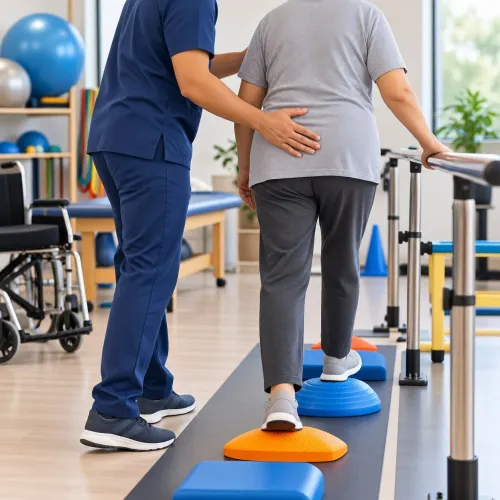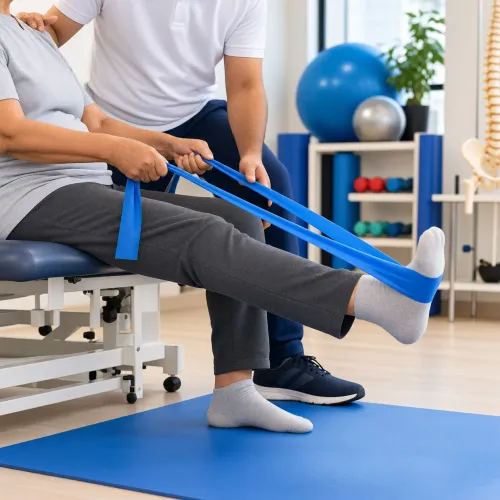
Shoulder rehabilitation starts before the operation for many patients, but the exercises and restrictions depend on the diagnosis, the planned procedure, and the repair’s protection needs. You will learn what to assess before surgery, how to prepare for the first weeks at home, and how recovery can progress from protected movement to work, driving, sport, and overhead activity.
Key takeaways
- Record pain, movement, strength, sleep, and daily function before surgery.
- Practise sling use, supported exercises, dressing, bathing, and safe transfers.
- Follow the operation-specific protocol for movement limits and strengthening.
- Track recovery milestones with your surgeon and physiotherapist before returning to activity.
What preoperative shoulder physiotherapy should assess
Before surgery, assessment should create a measurable baseline and define the function you need to regain. Preoperative shoulder physiotherapy Kharadi should record pain intensity and triggers, shoulder range of motion, strength, posture, scapular control, and trunk movement. It should also document sleep, dressing, bathing, work, sport, and other daily tasks.
- Describe the movements and activities that matter after recovery: reaching a shelf, fastening clothing, lifting a child, returning to a desk job, or throwing.
- Test how the shoulder moves during reaching, lifting, and lowering. Note shrugging, trunk leaning, scapular winging, painful arcs, and movement habits that could complicate recovery.
- Identify avoidable stiffness, general deconditioning, and weakness in the hand, wrist, elbow, or opposite arm.
- Check practical barriers at home, including a high bed, narrow bathroom, difficult clothing, limited help, or frequently used items stored overhead.
- Record your usual sleep position, work demands, sport requirements, and the tasks you cannot currently complete.
This assessment does not repair a torn tendon or guarantee that surgery can be avoided. Its value is the comparison point: after surgery, your team can judge change against documented pain, movement, strength, and function rather than memory.
It also prepares you for a safer start by identifying restrictions, home problems, and skills to practise before the operation.
Exercises and skills to practise before the operation
Before surgery, practise only the shoulder movements approved for your diagnosis and surgical plan. Maintaining permitted motion and general conditioning can reduce the practical burden of the first few weeks, while rehearsal makes early home exercises less unfamiliar.
A diagnosis-approved programme may include:
- Scapular-control drills, posture work, and gentle conditioning such as walking or stationary cycling.
- Grip strengthening with a soft ball, plus repeated elbow and wrist movement during any planned sling period.
- Diaphragmatic breathing: let your abdomen expand as you inhale, then breathe out slowly without lifting your shoulders.
- Bed mobility and safe transfers, including how to sit up, stand, and lie down without pushing heavily through the surgical arm.
- Sling application and removal, one-handed dressing, and bathing strategies. Practise putting the operated arm into clothing first and removing it last.
- Home preparation: place frequently used items between waist and chest height, and move heavy, high, or awkward objects out of daily reach.
Repeat the prescribed routine with controlled movement rather than chasing fatigue. Your physiotherapist can adjust the dose if pain stays elevated after exercise, swelling increases, or your movement quality deteriorates.
Do not strengthen an acutely injured tendon or unstable joint without clearance from the surgeon or physiotherapist. Preoperative exercise does not repair a torn tendon, guarantee that surgery can be avoided, or replace surgical advice. Follow the written restrictions if they differ from general exercise guidance.
Why the operation determines the rehabilitation plan
A rotator-cuff repair cannot follow the same exercise plan as a shoulder replacement because each operation protects different tissues. The shoulder surgery physiotherapy rehabilitation plan in Kharadi, or anywhere else, must follow the operative note and the surgeon’s written restrictions—not pain levels alone.
| Procedure | Early rehabilitation focus | Main restriction |
|---|---|---|
| Rotator-cuff repair | Protect the tendon with passive or assisted motion | Avoid active lifting and later resistance until healing permits |
| Bankart or anterior instability repair | Restore controlled motion while protecting the front stabilisers | Limit combined abduction and external rotation because it stresses the repair |
| Labral procedure | Follow the specific repair and fixation instructions | Motion, loading and return to sport vary by the labrum procedure |
| Fracture fixation | Protect the bone and hardware while healing progresses | Follow bone-healing, fixation and weight-bearing instructions |
| Anatomic shoulder replacement | Restore movement while protecting the replacement | Avoid heavy lifting and forceful pushing or pulling |
| Reverse shoulder replacement | Use surgeon-approved motion and build deltoid control | Early extension with adduction and internal rotation may be restricted, including reaching behind the back, because it raises dislocation risk |
A common rotator-cuff sequence protects the repair for about 0–6 weeks, introduces gradual active motion around 6–10 weeks, and begins strengthening around 10–18 weeks. Tear size, tissue quality, repair security and the surgeon’s protocol can shift every stage.
That is why rehabilitation must be adjusted to the operation, not prescribed as generic shoulder exercises.
What recovery can look like from the first days to return to activity
In the first days, protect the repair: keep the wound clean and dry as instructed, watch swelling, wear the sling or brace for the prescribed duration, and sleep semi-reclined with the arm supported. Practise safe bed and chair transfers, and move your hand, wrist, and elbow frequently.
Shoulder recovery treatment Kharadi should follow the written surgical protocol, not pain alone.
| Stage | Rehabilitation focus | Progress check |
|---|---|---|
| Protected care | Sling use, wound protection, pendulums, and prescribed assisted forward elevation | Wound settled; pain and swelling controlled |
| Early motion | Assisted elevation and external rotation within the surgeon’s limit, such as 20° maximum when prescribed | Range improves without guarding or trunk movement |
| Active control | Active shoulder movement, gentle isometric contractions, and rowing or scapular exercises | Smooth motion without shrugging |
| Loading | Later resistance training and task-specific reaching | Strength and daily tasks improve without compensation |
| Return | Driving, work, sport, and overhead activity | Clearance based on healing, motion, strength, and control |
Progress must be both time-based and criteria-based. Reduced pain does not prove that a tendon, bone, capsule, or repair has healed; assess wound status, swelling, range, movement quality, strength, and everyday tasks before adding load. Driving, work, sport, and overhead decisions also depend on sling use, reaction control, job demands, and sport-specific strength.
Contact the surgical team promptly for:
- Increasing redness, drainage, or fever
- Rapidly worsening pain
- New numbness or weakness
- A changed shoulder contour
- Sudden loss of function
How to choose and coordinate shoulder rehabilitation in Kharadi
Bring the operative note or written protocol to your first appointment. Ask the surgeon to specify:
- The exact procedure and repair quality
- Permitted shoulder range and when active movement begins
- Sling duration and lifting limit
- Forbidden positions, such as combined abduction and external rotation
- Milestones for driving, work, sport, and overhead activity
A physiotherapist should follow these instructions, not infer restrictions from pain or a broad diagnosis. A rotator-cuff repair, Bankart repair, fracture fixation, and reverse shoulder replacement each require different protection. Adjust the home programme if symptoms remain elevated after exercise or movement quality deteriorates; more exercises are not automatically better.
For shoulder rehabilitation before and after surgery in Kharadi, Alam's Physio Care can be considered when you want local assessment and supervised progression, provided the clinic communicates directly with the surgical team and follows the operation-specific plan.
Use this comparison when choosing a service:
| Criterion | What to look for | Warning sign |
|---|---|---|
| Precautions | Written restrictions matched to your operation | Generic advice based only on pain |
| Progress | Measurable range, strength, and function milestones | No way to judge improvement |
| Home programme | Demonstration, dose, and clear adjustment rules | A long list of exercises without teaching |
| Daily function | Planning for dressing, work, driving, or sport | Exercises unrelated to your tasks |
Related services
Pre And Post-Rehabilitation Physiotherapy For Shoulder Pain ₹600 We provide specialized, evidence-based care for a wide range of shoulder conditions, focusing on pain reduction, joint stability, and functional... View service → |
Personalized recovery programs after orthopedic or neurological surgeries. Personalized recovery programs after orthopedic or neurological surgeries. We focus on regaining strength, flexibility, and confidence in movement. View service → |
Frequently asked questions
What should preoperative shoulder physiotherapy assess?
It should record pain intensity and triggers, shoulder range of motion, strength, posture, scapular control, trunk movement, sleep, and daily activities such as dressing, bathing, work, and sport.
Which exercises and skills should you practise before shoulder surgery?
Practise the exercises prescribed for your condition, along with sling use, supported movement, dressing, bathing, safe transfers, and activity modifications you will need after the operation.
Why does the type of shoulder operation determine rehabilitation?
Repairing a tendon, replacing the joint, stabilising the shoulder, and treating a fracture involve different tissues and restrictions, so the surgeon’s protocol sets movement and strengthening milestones.
What can shoulder recovery look like after surgery?
Early recovery focuses on protection, pain control, circulation, and approved movement. Later stages restore range, strength, daily function, and sport or work capacity under clinical guidance.
How should you coordinate shoulder rehabilitation in Kharadi?
Choose a physiotherapist who can follow the surgeon’s written protocol, measure progress, communicate changes, and adapt exercises to your work, home, sleep, and activity needs.
Keywords