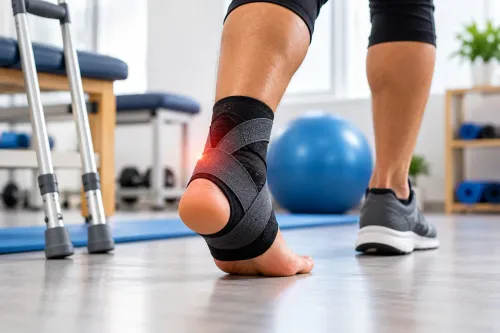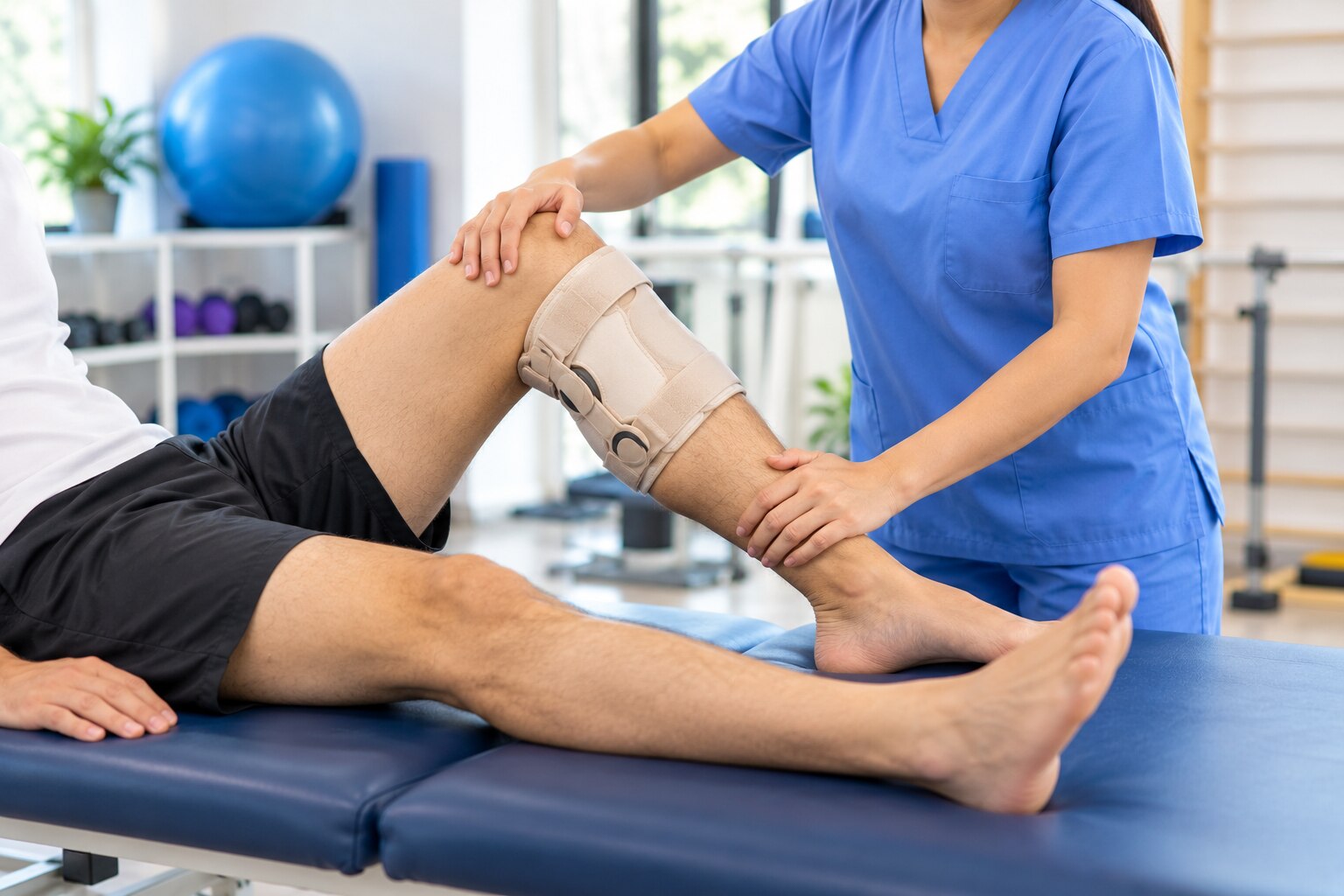
Stiffness after a fracture can come from immobilisation, swelling, scar tissue, muscle weakness, and guarding because movement hurts. You will learn how to judge warning signs, follow safe movement restrictions, progress from protected exercise to daily tasks, and measure whether recovery is actually improving.
Key takeaways
- Move within your clinician’s limits; do not force sharp or escalating pain.
- Progress from gentle motion to stretching, strengthening, weight-bearing, and daily tasks.
- Track range of motion, swelling, pain, strength, and task ability each week.
- Seek review for worsening pain, swelling, numbness, colour change, or stalled progress.
Why a Fractured Joint Becomes Stiff—and When It Needs Review
Stiffness usually comes from several overlapping problems, not the healed bone alone. A cast or brace reduces joint movement; swelling raises tissue resistance; pain causes protective muscle guarding; and scar tissue or shortening can develop in the capsule, tendons, and nearby soft tissue. Weak muscles and fear of movement then make ordinary tasks harder.
| Finding | What it may indicate | Action |
|---|---|---|
| Gradual stiffness after cast removal | Immobilisation, swelling, weakness | Arrange rehabilitation and track movement |
| Increasing swelling, warmth, redness, or pain | Irritation, infection, or another complication | Contact your orthopaedic clinician promptly |
| Numbness, new weakness, pale or blue fingers or toes | Nerve or circulation problem | Seek urgent medical review |
| Severe pain with burning or electric quality, extreme touch sensitivity, sweating, or temperature or colour change | Possible complex regional pain syndrome | Request prompt coordinated medical and rehabilitation care |
| A hard mechanical block or steadily worsening movement | Structural restriction or delayed healing | Ask for orthopaedic reassessment and imaging |
Do not force a stiff joint through sharp pain. High-force stretching can increase swelling and remains unsafe until the bone and soft tissues have healed; persistent restriction may need imaging or a procedure rather than harder physiotherapy.
Elevation, active muscle pumping, prescribed compression, and regular movement can help swelling, but check compression if you have reduced sensation, wounds, circulation problems, or vascular disease.
For stiff joints after fracture physiotherapy Kharadi, take your operative report, imaging, fracture date, medication list, and current weight-bearing or lifting limits. If instructions conflict or are missing, your therapist should confirm the permitted load with the orthopaedic team.
When to Move, Stretch, Strengthen, and Bear Weight Safely
The safe level is the one permitted by your orthopaedic clinician and tolerated without a lasting increase in pain or swelling. Check the fracture’s stability, fixation, cast or brace, soft-tissue healing, and written limits before you move, stretch, strengthen, or bear weight.
Start active range-of-motion exercises when movement is allowed. Move slowly within the available range; do not force a joint through sharp pain or push against a restriction. Assisted movement or gentle passive stretching belongs in the plan only when your clinician or physiotherapist has cleared it.
| Activity | Safe starting level | Progress when |
|---|---|---|
| Movement | Active or assisted motion within the prescribed range | Swelling and pain settle after practice |
| Stretching | Gentle tension, never forceful pressure | Range improves without next-day worsening |
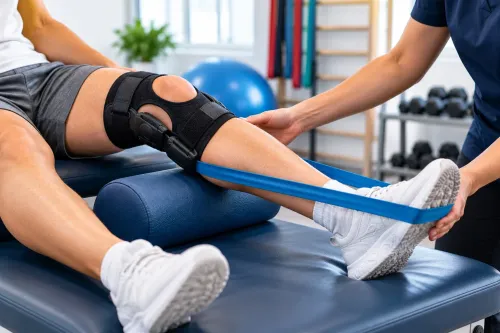
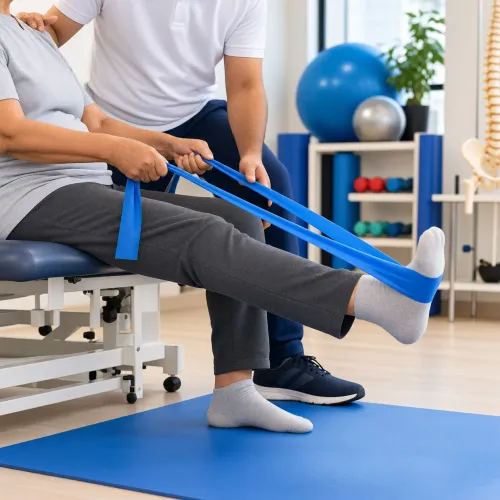
| Strengthening | Static contractions or light resistance when cleared | You control the movement without compensation |
| Weight-bearing | Non-weight-bearing, partial, or full weight as prescribed | Walking remains controlled without a worsening limp |
Do not add weights, resistance bands, impact, or extra walking because the fracture feels better. Excess loading across an unstable fracture can shift alignment or stress fixation; passive stretching alone also leaves weakness and poor motor control untreated.
If you are searching for physiotherapy after fracture limited movement, bring the operative report, imaging, fracture date, current restrictions, and medication list. Ask the therapist to confirm unclear loading limits with the orthopaedic team rather than guessing. Stop and seek review if exercise causes increasing swelling, warmth, numbness, colour change, or severe pain.
What to Work on in the Shoulder, Elbow, Wrist, Hip, Knee, and Ankle
The affected joint determines what you restore first: movement, tendon glide, strength, balance, or weight-bearing. A Kharadi plan for fracture rehabilitation for stiffness should also examine swelling, scars, muscle weakness and nearby joints, not just the painful joint.
| Joint | Main rehabilitation focus | Key caution |
|---|---|---|
| Shoulder | Gentle elevation, rotation and shoulder-blade control; later reaching and lifting | Do not force movement after fixation or dislocation repair until cleared |
| Elbow | Bending, straightening, forearm turning and hand use | Avoid aggressive stretching that increases swelling or irritates healing tissues |
| Wrist | Wrist motion, forearm rotation, finger tendon glide, grip, pinch and scar mobility | A moving wrist does not rule out disabling finger stiffness or tendon adhesions |
| Hip | Hip motion, glute strength, walking pattern and transfers | Follow the exact weight-bearing and movement limits after surgery |
| Knee | Bending, straightening, quadriceps activation, walking, stairs and balance | Persistent limping can reflect weakness and habit after union, not failed healing |
| Ankle | Dorsiflexion, calf strength, foot control, balance and gait | Progress loading only within the orthopaedic clinician’s instructions |
For stiff joints after fracture physiotherapy Kharadi, take your imaging, operative report, fracture date, medication list and written lifting or weight-bearing limits. If instructions conflict, the therapist should confirm them with the orthopaedic team rather than guess.
Burning pain, extreme touch sensitivity, colour or temperature change, sweating changes, or rapidly worsening stiffness needs prompt medical review for complex regional pain syndrome.
A Practical Progression From Gentle Movement to Daily Tasks
Use several short, tolerable practice sessions rather than one forceful stretching session. Record a functional target, such as turning a key, reaching a shelf, walking 100 metres, or rising from a chair, and compare movement and task performance each week.
1. Start with active or assisted joint movements within the permitted range. Add gentle gripping and releasing, or supported reaching, only if your fracture position, brace, and orthopaedic restrictions allow it.
2. Build control before resistance. Practise holding a cup, rotating the forearm, or reaching to different shelf heights; stop short of sharply increasing pain. Passive stretching alone will not correct weakness or guarded movement.
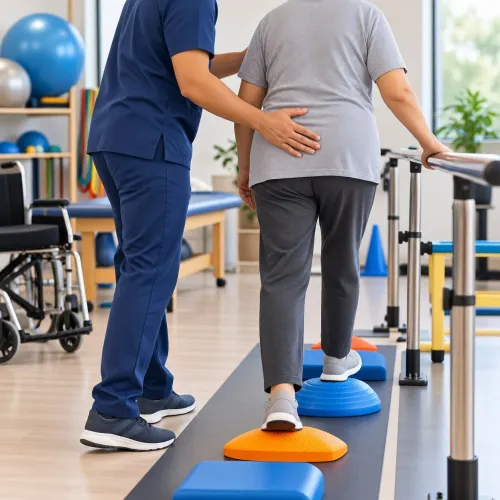
3. For a leg fracture, progress from supported standing to weight shifting and walking only at the instructed weight-bearing level. Then practise a specified distance with a smoother step, rather than simply walking longer while limping.
4. Add balance beside a stable support, followed by step-ups and stairs. Use the rail, begin with a low step, and increase height or repetitions only when you can control the knee and ankle without collapsing or avoiding the injured side.
5. Practise sit-to-stand, shallow squats, and reaching from standing before deeper squats or carrying loads. Keep the movement slow and symmetrical.
Mild stretching or muscle effort is acceptable. Reduce the dose and seek review if swelling persists, motion is worse afterwards, or pain remains substantially worse the next day. Keep all weight-bearing changes within your clinician’s instructions.
How to Measure Recovery and Choose Follow-Up Care in Kharadi
Treatment is working when measurements and daily function improve, not simply when pain feels better. Ask the therapist to record range of motion in degrees, end-feel, swelling, pain, strength, grip or walking ability, and one task you struggle with. The uninjured side provides context, not a compulsory target; anatomy and pre-injury movement differ.
| Measure | Improvement | Prompt review |
|---|---|---|
| Range of motion | More degrees with the same pain level | Movement plateaus or worsens |
| Swelling and pain | Less swelling and easier movement after exercise | Increasing warmth, redness, or severe pain |
| Function | Better grip, stairs, balance, walking, or reaching | New loss of function or inability to bear the permitted load |
| Sensation and skin | Normal colour, temperature, and touch tolerance | Burning pain, extreme touch sensitivity, sweating, or colour or temperature change |
For a physiotherapy assessment in Kharadi, take:
- The operative report, X-ray or scan reports, and latest imaging
- The fracture date, surgery date, and details of the cast, brace, or fixation
- Written weight-bearing, lifting, and movement restrictions
- Your medication list, pain pattern, swelling changes, and home-exercise record
If instructions conflict or are missing, the therapist should contact your orthopaedic team rather than guess the safe load. Alam's Physio Care can use this information to select fracture rehabilitation for stiffness in Kharadi around the joint, scar, swelling, muscle weakness, and adjacent joints.
Do not demand forceful manipulation for a stubborn restriction. High-force stretching can increase swelling or damage healing tissue; orthopaedic review and imaging may be safer. Comparing joint stiffness treatment after fracture in pune providers works best when each explains the measurements, progression, and escalation plan.
Related services
Pre And Post-Rehabilitation Physiotherapy For Shoulder Pain ₹600 We provide specialized, evidence-based care for a wide range of shoulder conditions, focusing on pain reduction, joint stability, and functional... View service → |
Ankle Sprain, Ankle Fracture Rehabilitation,Tendonopathies & Soft Tissue Injuries,Ankle Impingement Syndromes Physiotherapy for ankle injury 🦶 Ankle Physiotherapy & Rehabilitation Ankle rehabilitation is a specialized physiotherapy program designed to restore strength, stability, and... View service → |
Frequently asked questions
Why do joints become stiff after a fracture?
Reduced movement, swelling, pain-related muscle guarding, scar tissue, shortened soft tissue, weakness, and fear of movement can all limit mobility.
When should you move, stretch, strengthen, and bear weight after a fracture?
Follow the movement and loading limits set by your orthopaedic clinician, then progress from gentle movement to stretching, strengthening, weight-bearing, and daily tasks.
Which joints need targeted work after fracture rehabilitation?
Your programme may address the shoulder, elbow, wrist, hip, knee, or ankle, depending on the fracture, immobilisation, symptoms, and movement limits.
How can you measure recovery from joint stiffness?
Track joint range of motion, pain, swelling, strength, weight-bearing tolerance, and specific daily tasks over time.
When should you seek follow-up care for limited movement?
Arrange a review when pain or swelling worsens, new numbness or colour changes appear, movement stops improving, or daily function remains restricted.
Keywords