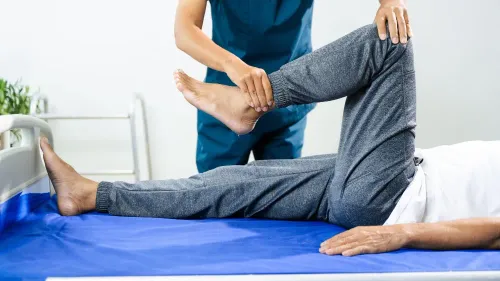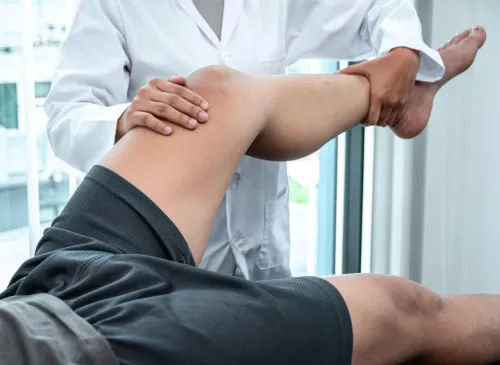
“Lumbar spondylitis” can describe several different causes of lower-back pain, so treatment should begin by clarifying the diagnosis and checking for nerve or systemic warning signs. You will learn how assessment leads to a staged rehabilitation plan, how progress is measured, and when physiotherapy needs medical review instead.
Key takeaways
- Seek urgent review for new bladder, bowel, saddle-area, or progressive leg symptoms.
- Assessment links your pain pattern, movement, strength, and daily activities before exercises begin.
- Early treatment controls symptoms while maintaining safe, regular movement.
- Track walking, bending, strength, and daily function to judge recovery progress.
What lumbar spondylitis means—and when back pain needs urgent review
“Lumbar spondylitis” is not one precise diagnosis. It may describe lumbar spondylosis: age-related wear in discs and facet joints that causes local stiffness or activity-related pain, although an X-ray change does not prove it is the pain source. Physiotherapy for lumbar spine pain should identify the pattern before starting routine exercises.
| Pattern | Clues that point towards it | What changes the plan |
|---|---|---|
| Lumbar spondylosis | Gradual mechanical pain and stiffness, worse with loading or prolonged positions | Treat symptoms and function; imaging is not automatic |
| Muscle strain | Local pain after lifting, twisting or sudden exertion, without numbness or weakness | Graded movement and activity modification |
| Disc or nerve problem | Pain travels into the buttock or leg, with tingling, numbness, altered reflexes or weakness | Check neurological signs and arrange medical review if weakness progresses |
| Spinal stenosis | Leg pain, heaviness or numbness when standing or walking, eased by sitting or bending forward | Test walking tolerance and consider medical review |
| Inflammatory back pain | Onset before 45, lasting over three months, night pain, alternating buttock pain, marked morning stiffness, and improvement with exercise rather than rest | Seek assessment for inflammatory disease |
Do not start routine physiotherapy until urgent causes are assessed if you have new bladder or bowel difficulty, numbness around the saddle area, progressive leg weakness, major trauma, fever, unexplained weight loss, or a cancer history. These signs can indicate cauda equina syndrome or serious spinal disease and require prompt medical care.
MRI or X-ray is reserved for findings likely to change management.
What happens during the first assessment
Assessment starts by identifying what is driving the pain, not by prescribing exercises. The clinician asks when it began, where it travels, what worsens or eases it, and whether coughing or sitting changes symptoms.
They also ask about morning stiffness, night pain, injury, fever, unexplained weight loss, cancer history, steroid use, numbness, weakness, bladder or bowel changes, and saddle numbness.
The physical examination creates a baseline for the lumbar spondylitis treatment steps. It may include:
- Observing posture, guarded movement and walking
- Measuring lumbar and hip movement
- Testing leg strength, sensation and reflexes
- Recording pain on a 0–10 scale and your sitting, walking, sleep or lifting tolerance
The findings guide the next decision:
| Finding | What it may suggest | Next decision |
|---|---|---|
| Leg pain with weakness, altered reflexes or reduced sensation | Nerve-root involvement or sciatica | Medical review if deficits are significant, progressive or persistent |
| Pain with walking that improves when sitting, with leg heaviness or numbness | Spinal stenosis | Review the diagnosis and consider medical assessment |
| Night pain, fever, weight loss, recent trauma or cancer history | Infection, fracture or another serious cause | Prompt medical review before routine rehabilitation |
| Symptoms beginning before age 45, lasting over three months, with marked morning stiffness or alternating buttock pain | Inflammatory back disease | Rheumatology or medical referral |
| No red flags, stable examination and functional limitation | Mechanical back pain or age-related change | Begin active rehabilitation; imaging is not routine at this stage |
How the early treatment phase controls symptoms without stopping movement
The first sessions aim to reduce symptoms without putting your back on bed rest. Your therapist sets a functional target—walking farther, sitting longer, sleeping better or completing work—not complete pain relief before movement begins.
Early lumbar spondylitis treatment steps usually include:
- Activity modification: reduce the movement or load that triggers a flare, change lifting technique, and take regular movement breaks instead of staying still.
- Comfortable movement: practise a tolerable range of spinal, hip or walking movements. Pain does not automatically mean tissue damage.
- Education: learn how posture, pacing, sleep routines and a home programme affect recovery. Clinic treatment cannot replace regular practice at home.
- Heat or cold: use wrapped heat for stiffness or muscle guarding, or wrapped cold after activity if it feels better. Protect your skin and stop if numbness or irritation develops.
- Manual therapy: hands-on joint or soft-tissue techniques can provide short-term relief, but they do not reverse spinal changes. Pair them with active exercise.
Physiotherapy for lumbar spine pain should treat the response, not chase every sensation. If pain rises sharply or remains worse into the next day, reduce the exercise’s repetitions, range or duration and return to the last comfortable dose.
Resume progression after walking, sleep and daily function settle; do not stop all movement after a brief, manageable increase. Tell your therapist about a flare so the plan can be adjusted rather than abandoned.
How strength, mobility and daily function are rebuilt
Progress is measured by what you can do, not by waiting for every symptom to disappear. The back rehabilitation process in Kharadi follows a graded sequence that builds capacity without provoking a prolonged flare.
1. Start with comfortable movement: pelvic tilts, spinal mobility, position changes and gentle trunk or hip exercises. The aim is to reduce stiffness and restore control, not force range.
2. Add short, frequent walks and increase distance or duration gradually. Use movement breaks instead of staying in bed or sitting for long periods.
3. Build strength with exercises for the abdomen, back, hips and legs. Increase repetitions, resistance, range or exercise time only when your response over the next 24 hours remains acceptable.
4. Practise sitting, standing, bending and getting up from a chair. Adjust chair height, lumbar support and screen position so daily practice resembles your actual routine.
5. Rehearse lifting, carrying, reaching, work duties and household tasks with safer technique and manageable loads. Graded exposure rebuilds confidence as well as physical capacity.
A lumbar spondylitis recovery plan depends on the home programme between appointments. Complete the prescribed exercises, walk regularly, change position before stiffness builds and record pain, sleep, walking and task tolerance.
A large flare or symptoms that remain worse the next day means reduce the dose and contact your physiotherapist; it does not mean abandoning all movement. Manual therapy can assist short-term comfort, but exercise and self-management maintain the gains.
How you know the recovery plan is working—and when to change it
At reassessment, your physiotherapist should compare pain behaviour, walking distance, sitting tolerance, sleep, strength, movement, and agreed daily goals with the baseline. A working lumbar spondylitis recovery plan produces better function, even if occasional pain remains.
| Finding | What it means | Next step |
|---|---|---|
| Improved walking, lifting or sleep | Capacity is increasing | Progress exercise or reduce visit frequency |
| Pain unchanged but function improves | Symptoms are settling slowly | Continue and review load |
| No functional gain after agreed review period | The plan is not producing enough change | Recheck diagnosis, technique, adherence and medical needs |
| New leg weakness, loss of sensation or bladder/bowel change | Possible nerve or emergency problem | Stop routine progression and seek urgent medical assessment |
Discharge means you can manage flare-ups, practise your exercises safely, pace activity, take movement breaks, and resume essential work or household tasks. Long-term self-management usually includes a strength and mobility routine, walking, lifting adjustments, sleep habits, and a clear rule for reducing load during a flare.
When comparing lumbar spondylitis physiotherapy for treatment process Kharadi, ask:
- What diagnosis are you treating, and what findings support it?
- Which measures will you repeat at reassessment?
- What exercises will I do at home, and how will you progress them?
- Is manual therapy only supporting an active programme?
- What changes require medical review?
Alam's Physio Care should be judged by the same evidence: a clear baseline, measurable goals, active home work, and a defined back rehabilitation process Kharadi rather than passive treatment alone.
Related services
Lumber Spondylitis We specialize in addressing a wide range of spinal conditions through personalized care plans. View service → |
Treatment for back pain, knee injuries, ligament tears, and arthritis. Orthopedic & Sports Physiotherapy 🏋️ Orthopedic & Sports Physiotherapy Orthopedic and Sports Physiotherapy focuses on the prevention, treatment, and rehabilitation of injuries... View service → |
Frequently asked questions
What does lumbar spondylitis mean?
It is a broad term often used for lumbar spondylosis, or age-related changes in discs and facet joints. Imaging changes do not prove they cause your pain.
What happens during the first assessment?
A clinician reviews your symptoms and history, checks spinal movement, leg strength, sensation, reflexes, and functional tasks, then screens for warning signs.
How does early treatment control symptoms without stopping movement?
Treatment may combine activity modification, comfortable mobility exercises, education, and graded loading. The aim is to reduce aggravating strain while preserving movement.
How are strength, mobility, and daily function rebuilt?
Your plan progresses from symptom-tolerated movements to strengthening, walking or activity practice, and tasks that match your work and home demands.
How do you know the recovery plan is working?
Improvement appears as easier movement, longer walking tolerance, better strength, fewer symptom flares, and more independent daily activity. Change the plan if progress stalls or symptoms worsen.
Related services
back pain, neck pain, and joint discomfort Effective treatment for back pain, neck pain, and joint discomfort. View service → |
fractures, arthritis, post-surgical conditions, and musculoskeletal pain. Focused on bones, joints, muscles, and ligaments. Helps in recovery from fractures, arthritis, post-surgical conditions, and musculoskeletal pain. View service → |
Keywords